For most of the last decade, floor plan interest was a line item dealers glanced at once a month and moved on. In 2026, it's become one of the more important levers on gross profit — and the dealers who understand why are protecting margin that others are quietly losing.
What's Changed
Two forces are compounding at the same time:
Rates are elevated. Floor plan lines are typically priced as a spread over SOFR, and that spread has widened as lenders tighten credit standards. The result is a meaningfully higher carrying cost per financed unit than dealers saw just a couple of years ago.
Inventory is sitting longer. Days' supply has climbed across large parts of the market. Public dealer group filings show weighted average floor plan interest rates moving from roughly 3.9% in 2023 to over 6% in 2025 on used vehicle facilities — and when cars turn more slowly, dealers are financing each unit for more days at that higher rate.
Individually, either trend would be manageable. Together, they've changed the math on what actually makes a vehicle profitable.
Why Acquisition Price Is Only Half the Equation
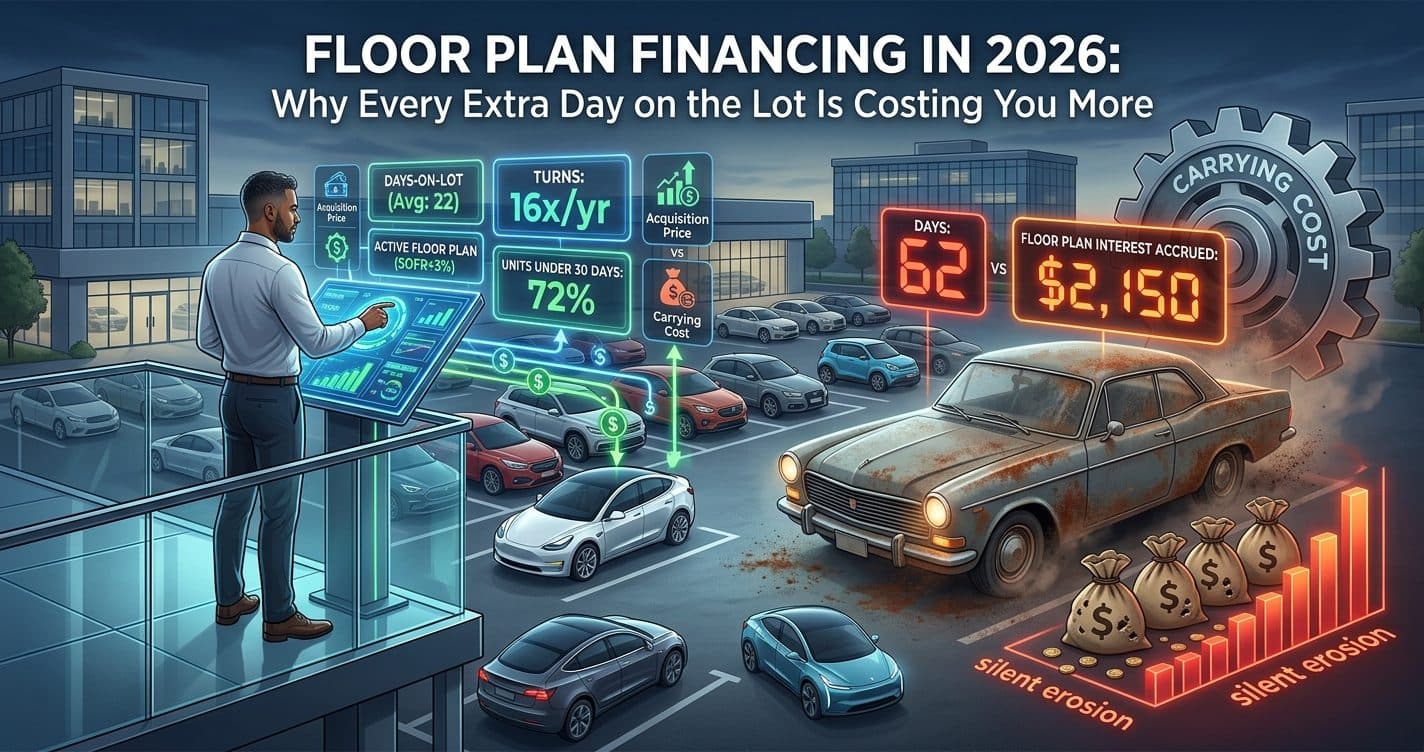
It's tempting to judge a purchase purely on how far under market you bought it. But a unit bought cheap that sits on the line for 75–90 days can end up less profitable than a unit bought a bit higher that turns in three weeks. That's because floor plan interest is a daily cost, not a one-time one — the longer a car sits, the more it silently erodes the deal.
The practical takeaway: expected days-to-turn deserves as much weight in a buying decision as the acquisition price itself.
A simple way to think about it:
- Know your true carrying cost per unit, per day, including floor plan interest, prep, and holding costs
- Weight aging inventory reports as heavily as gross profit reports
- Treat a car crossing 45–60 days as a pricing or wholesale decision, not a "let's wait for the right buyer" decision
Where Dealers Are Finding Relief
Faster turn beats lower cost basis. Sourcing channels and pricing strategies that reliably move inventory in under 30 days reduce total interest expense more than chasing an extra few hundred dollars off the acquisition price.
Captive and manufacturer-backed floor plan credits still help — where available. Franchise dealers with access to manufacturer floor plan assistance are seeing that offset shrink as OEMs face their own margin pressure, but it's still worth maximizing before looking at outside lenders.
Aging inventory reports need to be a daily habit, not a monthly one. The dealers managing this well are looking at units by days-on-lot weekly at minimum, with clear trigger points for repricing or wholesaling.
Negotiate the spread, not just the line size. With floor plan pricing tied to SOFR plus a spread that varies by credit quality, dealers with strong financials have room to negotiate better terms than they may realize, especially with independent floor plan lenders competing for business.
The Bigger Picture
None of this is a crisis — it's a recalibration. Floor plan financing has moved from a background cost of doing business to a real, trackable factor in dealership profitability. Heading further into 2026, the dealers who build carrying cost into every buying decision, and who treat inventory age as an active metric rather than a report they glance at, are the ones protecting their margins while competitors absorb the hit quietly.
Rate figures referenced reflect industry-reported averages and public dealer group financial disclosures as of late 2025 / early 2026. Actual floor plan terms vary by lender, dealer credit profile, and vehicle type.
Ready to modernize your dealership?
See how RevCore replaces your CRM, desking, F&I, and service tools with one platform.
Book a Demo